Blog
September 18, 2026
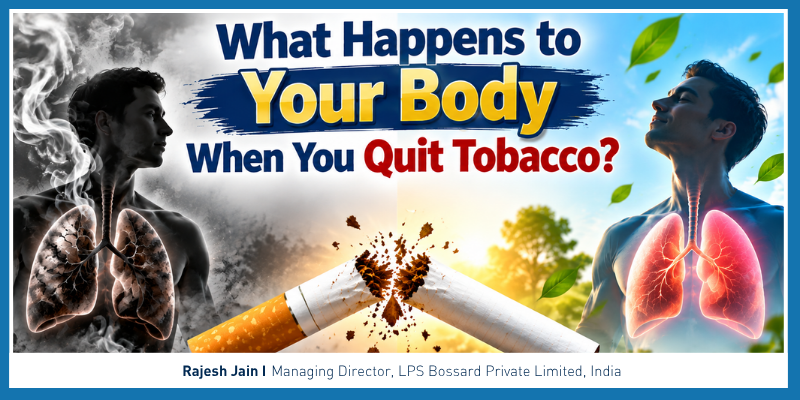
Quitting tobacco is one of the most important decisions a person can make for long-term health. Yet many people who have smoked or used tobacco for years wonder whether stopping now will really make a difference. The encouraging answer is yes. The human body has an extraordinary ability to respond when tobacco exposure stops. Some positive changes begin surprisingly quickly, while others develop gradually over months and years. The benefits can extend to the heart, lungs, circulation, senses, physical stamina and overall risk of serious disease.
Becoming tobacco-free should therefore not be viewed simply as giving up a habit. It is an opportunity to allow the body to recover, protect the people around us and regain freedom from dependence. Whether someone has used tobacco for a few years or several decades, stopping can still be a valuable investment in future health and quality of life.
⏱️ The First Hours: Recovery Begins
The benefits of stopping smoking begin much sooner than many people realise. After the last cigarette, the body is no longer receiving the same continuous exposure to nicotine, carbon monoxide and thousands of other chemicals found in tobacco smoke. Heart rate begins moving toward normal levels, and the amount of carbon monoxide in the blood gradually falls. As carbon monoxide decreases, the blood becomes better able to carry oxygen throughout the body.
These are changes that we cannot necessarily see or feel immediately, but they represent the beginning of an important recovery process. Every cigarette not smoked means another period during which the lungs, heart and blood vessels are no longer being exposed to a fresh dose of tobacco smoke. The decision to quit therefore starts mattering from the very beginning.
🌅 The First Few Days: The Body Adjusts
The first few days without tobacco can be challenging because nicotine levels in the body fall significantly. A person who has become dependent on nicotine may experience cravings, irritability, restlessness, anxiety, difficulty concentrating or changes in sleep. These symptoms sometimes make people think that quitting is harming them, when in fact the body and brain are adjusting to the absence of nicotine.
During this period, some people also notice changes in their senses of taste and smell. Food may begin to taste better and familiar aromas may seem stronger. A cup of tea, fresh fruit or a favourite home-cooked meal can become more enjoyable. The early days are an important milestone because every craving successfully managed helps weaken the connection between tobacco and everyday routines.
🫁 The First Few Weeks: Breathing and Circulation Improve
As the tobacco-free period continues, circulation can begin to improve and the respiratory system gets an opportunity to recover. Some people gradually notice that walking, exercising or climbing stairs becomes easier. The exact pace of improvement differs from person to person and depends on age, smoking history, general health and whether any underlying lung or heart disease is already present.
Interestingly, some people may temporarily notice changes in coughing after quitting. The respiratory system has natural mechanisms for clearing mucus and debris, and these mechanisms may begin functioning differently once smoking stops. Persistent, worsening or unusual coughing should always be medically evaluated, but changes during the early quitting period do not necessarily mean that something has gone wrong.
❤️ Your Heart Benefits When You Stop Smoking
Many people associate smoking primarily with lung cancer, but tobacco also has major effects on the cardiovascular system. Smoking damages blood vessels and contributes to processes that increase the risk of heart attacks, strokes and other cardiovascular problems. This damage can develop quietly, sometimes without obvious symptoms.
Stopping smoking removes an important continuing source of cardiovascular harm. Over time, the risk of serious heart-related problems falls compared with continuing to smoke. This is one reason people should never assume that they have smoked for too many years for quitting to matter. The cardiovascular benefits begin developing much earlier than many people imagine.
🩸 Better Circulation Means a More Active Life
Healthy circulation allows oxygen and nutrients to reach tissues throughout the body. Smoking interferes with normal cardiovascular function, while stopping gives the circulatory system an opportunity to function more effectively. Improved circulation can contribute to better physical capacity and exercise tolerance over time.
The importance of this goes far beyond sport or fitness. Good physical capacity allows people to walk comfortably, climb stairs, work, travel, play with children or grandchildren and maintain independence as they grow older. When we think about quitting tobacco, therefore, we should think not only about avoiding disease but also about preserving the everyday abilities that make life enjoyable.
🫁 Months Without Smoking: Giving the Lungs Time to Recover
The lungs do not recover from years of smoking overnight. Healing takes time, and the amount of recovery differs from one individual to another. Over the months after quitting, respiratory symptoms such as coughing and shortness of breath may improve in many people. The extent of improvement depends on factors including age, duration and intensity of smoking and whether permanent lung damage has already occurred.
Quitting should not be presented as a magic reset button. Some damage caused by long-term smoking may not be completely reversible. Nevertheless, stopping further exposure remains extremely valuable. Every tobacco-free month represents another month in which the lungs are not repeatedly exposed to tobacco smoke, giving the respiratory system the best possible environment for recovery.
🧠 What Happens to the Brain After Nicotine?
Nicotine affects systems in the brain involved in reward and reinforcement. With repeated tobacco use, the brain becomes accustomed to receiving nicotine regularly. This is one reason a person may continue smoking even when they understand perfectly well that tobacco is harmful.
When nicotine is removed, the brain needs time to adjust. During this period, cravings, mood changes, difficulty concentrating and sleep disturbances may occur. Understanding this biology is important because tobacco dependence should not be treated simply as a lack of willpower. Quitting can be difficult even for highly motivated people, and professional counseling, family support and appropriate medical treatment can make the process easier.
🔗 Breaking Tobacco's Hold on Daily Life
Tobacco dependence is not purely chemical; it can also become deeply behavioural. A cigarette may become associated with morning tea, driving, finishing a meal, meeting friends, work breaks or stressful situations. After years of repetition, the brain begins connecting these ordinary activities with smoking.
Successful quitting therefore often requires changing routines as well as overcoming nicotine dependence. Someone accustomed to smoking after dinner might take a short walk instead. A person who associates cigarettes with tea may temporarily change the location or routine. Someone who smokes during stressful moments might use breathing exercises, physical activity or conversation as an alternative. Small changes repeated consistently can gradually weaken old associations.
🦷 Your Mouth Also Benefits
Tobacco can affect the teeth, gums and soft tissues of the mouth. Smokeless tobacco deserves particular attention because tobacco substances can remain in direct contact with oral tissues for extended periods. Stopping tobacco exposure is therefore an important step toward protecting oral health.
Regular dental examinations are especially important for people with a history of tobacco use. A persistent ulcer, unusual white or red patch, unexplained lump, bleeding or another continuing change in the mouth should not be ignored. Early professional evaluation is always preferable to waiting and hoping that an unusual symptom will disappear on its own.
👨👩👧👦 Quitting Protects More Than One Person
Stopping smoking is not only a personal health decision. Tobacco smoke enters the surrounding environment, meaning family members, friends and colleagues can also be exposed. Children deserve particular protection because they often cannot choose the environment in which they live or travel.
Creating a completely smoke-free home and vehicle is an important way of protecting family members. There is also a powerful behavioural benefit. Children learn from what they observe. When a parent or grandparent decides to quit tobacco, the message extends beyond words. It demonstrates that health is important enough to make difficult changes for.
💰 Your Finances Begin Recovering Immediately
Some health benefits take time to become noticeable, but the financial benefit of quitting begins immediately. An amount that seems small when spent each day can become surprisingly large when multiplied over months, years and decades.
Money previously spent on tobacco could instead support children's education, family experiences, fitness, travel, savings, healthcare or charitable activities. One practical quitting strategy is to put aside the amount that would normally have been spent on tobacco. Watching these savings accumulate provides a visible and positive reminder of what a tobacco-free lifestyle is giving back.
📅 One Year Tobacco-Free: An Important Achievement
Completing one year without smoking is an important milestone. During that year, a person may have passed through stressful days, celebrations, festivals, work pressures, family gatherings and social situations that once triggered the desire to smoke. Remaining tobacco-free through these experiences demonstrates not only physical recovery but also an important behavioural transformation.
Over time, a new identity can develop. Instead of constantly thinking, “I am trying to quit,” a person begins to recognise, “I don't smoke anymore.” That change in thinking can reinforce confidence and make the tobacco-free lifestyle feel increasingly normal.
🛡️ The Long-Term Benefits Continue
The benefits of quitting continue to accumulate over the years. Compared with continuing to smoke, stopping reduces the future risk of several serious illnesses, including cardiovascular disease and a number of cancers. The exact level of risk varies between individuals, and quitting does not necessarily make a former smoker's risk immediately identical to that of someone who has never smoked.
This distinction is important because quitting does not erase the past. What it can do is change the direction of the future. Stopping additional tobacco exposure gives the body an opportunity to recover where possible while reducing the continuing accumulation of tobacco-related harm.
👴 Is It Ever Too Late to Quit?
A common and damaging belief among long-term smokers is that there is no point in quitting after many years. In reality, stopping tobacco can still provide meaningful health benefits later in life. The earlier a person stops, the better, but age alone should not become a reason to continue.
For someone who has never smoked, the best choice is never to start. For someone who already uses tobacco, the most valuable step is to stop as early as possible. The focus should not remain on the cigarettes smoked yesterday but on the cigarettes that do not have to be smoked tomorrow.
🌱 What If a Health Problem Has Already Developed?
People who have already developed heart disease, lung disease or another medical condition may sometimes feel that quitting can no longer help. However, stopping tobacco remains important because continuing exposure can place additional strain on a body that is already dealing with illness.
Anyone with an existing medical condition should discuss quitting with a healthcare professional. A doctor can recommend an approach suited to the person's health, medications and level of nicotine dependence. The objective is not to judge previous choices but to make the healthiest possible decisions from the present onward.
🔄 What If You Have Tried to Quit Before?
Many people need more than one attempt before they become permanently tobacco-free. A previous unsuccessful attempt should not be interpreted as proof that quitting is impossible. Instead, it can provide useful information.
A person can ask what triggered the return to tobacco. Was it stress, a social gathering, alcohol, work pressure, a strong craving or simply being around other smokers? Understanding the trigger makes it possible to prepare differently next time. Every serious attempt to quit can teach lessons that strengthen the next one.
🤝 Support Can Make Quitting Easier
Tobacco dependence does not always need to be fought alone. Family members and friends can provide encouragement, particularly during the first weeks. People trying to quit can ask those around them not to offer tobacco and, where possible, avoid environments strongly associated with smoking during the early stages.
Healthcare professionals can also provide valuable support. Depending on the individual, behavioral counseling, nicotine-replacement therapy or other approved medicines may be appropriate. Seeking professional assistance should be viewed as a sensible health decision, not as a sign that someone lacks determination.
📋 Turning the Decision to Quit Into a Plan
A decision becomes more powerful when it becomes a plan. Choosing a quit date, writing down personal reasons for quitting, informing family members, removing tobacco products from the home and identifying common triggers can all help prepare for the transition.
It is equally important to develop alternatives for moments of craving. Walking, drinking water, deep breathing, exercising, speaking with a supportive friend or changing the immediate environment can help. Progress should also be recognised. One tobacco-free day, one week, one month, six months and one year are all achievements worth acknowledging.
If a person slips once, that single event does not need to become a permanent return to tobacco. The important step is to identify what happened, restart and continue moving forward.
🎓 Prevention Is Better Than Quitting
For young people who have never used tobacco, the most effective strategy is simple: never start. Preventing nicotine dependence is easier than overcoming it later.
Parents, schools and communities should have open conversations with young people about cigarettes, bidis, chewing tobacco, hookah, vaping and other nicotine products. Education should go beyond frightening warnings. Young people should understand how dependence develops, how peer pressure works and how marketing can make harmful products appear attractive or fashionable.
The ability to confidently say “No” today can prevent years of dependence tomorrow.
🌍 From Personal Change to Social Change
A tobacco-free society cannot be created by individuals alone. Families, schools, healthcare professionals, employers and community organisations all have a role. Homes can become smoke-free, schools can educate students, workplaces can support employees who want to quit, and healthcare professionals can routinely discuss tobacco cessation with patients.
Individual behaviour also influences others. A parent who quits may influence a child. A teacher may influence hundreds of students. A doctor may help thousands of patients during a career. One person's decision can therefore create benefits that extend far beyond that individual.
🎁 Quitting Is Not Just Giving Something Up
People often describe quitting by saying, “I am giving up cigarettes.” A more positive way of looking at the same decision is to recognise everything being gained.
A person is gaining greater freedom from dependence, cleaner air, an opportunity for the lungs and cardiovascular system to recover, protection for family members from second-hand smoke and money that can be spent on more meaningful things. Most importantly, quitting is an investment in future health and quality of life.
The goal is not simply to live without tobacco. It is to live with greater freedom.
🌟 Conclusion: Every Tobacco-Free Day Matters
The human body cannot change yesterday, but it responds to the decisions we make today. When a person stops smoking, recovery begins. Some benefits start relatively quickly, while others develop over months and years. Quitting cannot guarantee perfect health or reverse every effect of long-term tobacco exposure, but it can meaningfully change future health compared with continuing to smoke.
If you have never used tobacco, don't start. If you currently use tobacco, consider making today the beginning of your quitting journey. If someone you love is trying to quit, encourage and support them rather than judge them.
One tobacco-free hour can become one tobacco-free day. One day can become one week. One week can become one month, and one month can eventually become years of freedom from tobacco.
The journey may begin with a single decision, but its benefits can last a lifetime.
🚭 Breathe Better • Live Freer • Stay Tobacco-Free
Share :
Recent Post
-

🚭 What Happens to Your Body When You Quit Tobacco?
September 18, 2026 -

♻️ E-Waste: Why It Matters More Than Ever
June 30, 2026 -

☀️ Top 10 Benefits of Switching to Solar Energy Today
June 17, 2026 -

⚡ Electric Mobility: Driving Toward a Cleaner Tomorrow
June 17, 2026 -

🌿 Eco-Friendly Habits for Everyday Life
June 17, 2026 -

💧 Saving Water, Saving Life : A Call for Action
March 30, 2026 -

♻️ Waste Segregation: A Simple Step Toward Clean Living
January 31, 2026 -

☀️ Why Solar Energy Is the Key to a Sustainable Future
December 27, 2025 -

🌳 How Forests Help Fight Climate Change
December 24, 2025 -

🌍 What Is Climate Change?
November 29, 2025 -

Bhagwan Mahavir: A Visionary of Truth, Simplicity, and Self-Discipline
September 27, 2025 -

🌍 9 Ways to Reduce Your Carbon Footprint
August 18, 2025 -

High-Oxygen Trees for Sustainable Living
July 26, 2025 -

5S at LPS Bossard India: Small Steps, Big Impact
July 09, 2025 -

Say No to Tobacco: A Path to a Healthier Life
April 01, 2025 -

Stop War, Spread Love - Together for Peace!
January 02, 2025 -

Say No to Plastic: A Step Towards a Greener Future
October 06, 2024


Copyright © 2024 Rajesh Jain | All Rights Reserved.
